
What Credit Score Do You Need for a VA Loan?
Welcome Home Warrior Guide
Updated March 2026

Quick Answer
The VA does not set a minimum credit score to use your VA home loan benefit. However, most lenders look for a credit score of at least 620, and some may approve well-qualified veterans with scores in the 580–600 range. Strong income, low debt, and a clean recent payment history can help you qualify even if your score is not perfect.
Why Your Credit Score Matters for a VA Loan
Whether you are PCS’ing to a new duty station, separating from service and putting down roots, or buying your first home as a military family, your credit score influences how easily you can use your VA loan benefit. The VA program is designed to honor your service with flexible credit guidelines, no down payment in most cases, and competitive rates—but lenders still review your credit to make sure you can comfortably handle a mortgage payment.
Understanding how credit scores work with VA loans can help you plan ahead—whether that means building your score before a PCS move, cleaning up old accounts after a deployment, or comparing lenders to find one that best serves veterans. This guide breaks down what you really need to know, in plain language, so you can use your benefit with confidence.
You can explore all of our VA loan resources in the Welcome Home Warrior VA Loan Guide Library.
Credit Score Requirements at a Glance
Use this quick snapshot before you dive into the full guide.
- The VA does not set a minimum credit score—lenders do.
- Many VA lenders look for a score of around 620.
- Some lenders may approve scores in the 580–600 range with strong compensating factors.
- Recent on-time payments matter more than old late payments.
- You can often qualify after bankruptcy or foreclosure once waiting periods have passed.
- Paying down credit card balances and avoiding new debt can boost your score before you apply.
VA Loan Requirements Checklist
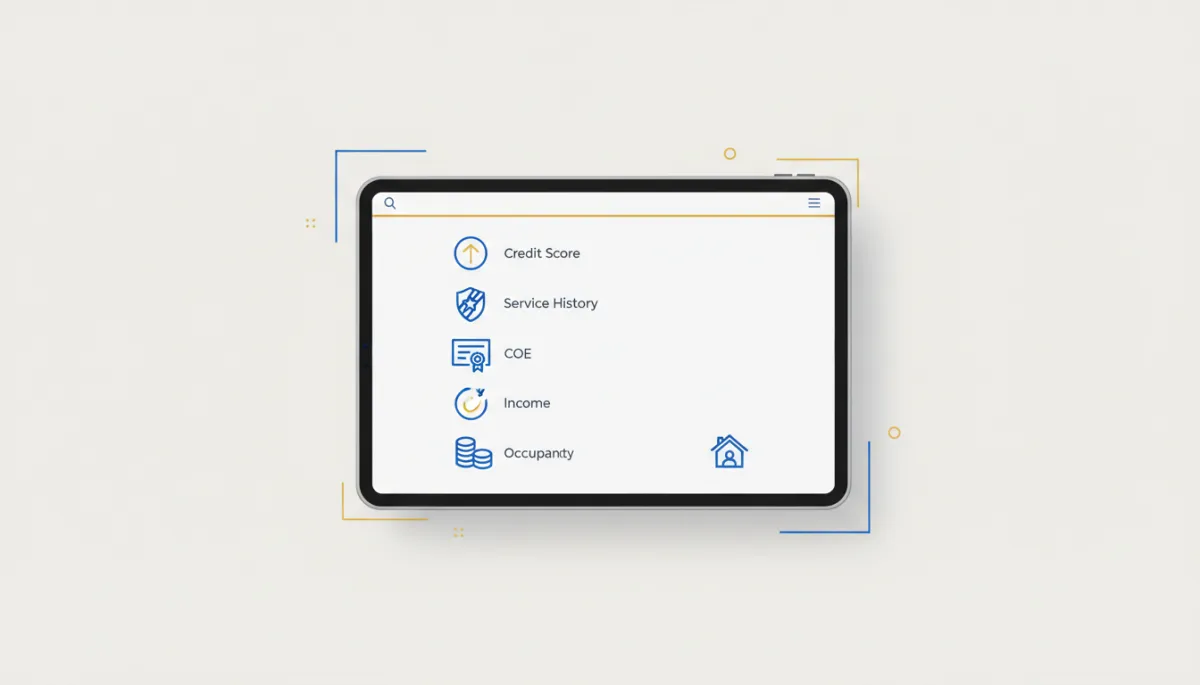
Use this quick visual checklist as you prepare to talk with a VA-approved lender.
- Eligible military service or qualifying spouse status
- Valid Certificate of Eligibility (COE)
- Recent pay stubs and LES or retirement statements
- 2 years of employment or service history
- Stable income and manageable monthly debts
- Credit report with recent on-time payments
- Plan to occupy the home as your primary residence
Military Service Requirements
Before lenders look at your credit score, the VA looks at your service history. In general, you may be eligible for a VA loan if you meet one of these conditions (there are some exceptions):
- 90 consecutive days of active-duty service during wartime, or
- 181 days of active-duty service during peacetime, or
- 6 years in the National Guard or Reserves, or
- You are the surviving spouse of a service member who died in the line of duty or from a service-related disability.
Your service record itself is not part of your credit score, but it determines whether you can use the VA benefit at all. Once your service eligibility is confirmed, lenders turn to your COE, credit, and income.
Certificate of Eligibility (COE)
Your Certificate of Eligibility is the VA’s official confirmation that you qualify for the VA loan benefit. Most lenders can pull your COE electronically, but you can also request it yourself using VA Form 26-1880 or through your VA.gov account.
- Your COE shows your entitlement amount.
- It notes whether you have used your VA benefit before.
- It confirms if you owe a VA funding fee or qualify for an exemption (for example, due to a service-connected disability).
Lenders review your COE alongside your credit report. A strong COE does not override poor credit, but it confirms that you are eligible to move forward in the process.

Credit and Income Requirements
This is the part most veterans worry about—but VA loans are often more forgiving than conventional mortgages. Instead of one strict credit-score rule, lenders look at the whole picture: your score, debt-to-income ratio, payment history, and residual income (how much is left after major expenses).
- Typical lender minimum: Around 620, though this varies by lender.
- Lower scores: May be approved with strong income, low debt, and a clean recent payment history.
- Recent late payments: Late payments in the last 12 months can hurt more than an older collection account.
- Bankruptcy or foreclosure: VA allows for a second chance after required waiting periods (often 2 years).
Your income is just as important. Lenders calculate a debt-to-income (DTI) ratio using your future mortgage payment plus car loans, credit cards, and other obligations. VA guidelines also use a residual income test to ensure that after housing and major bills, you still have enough left over to support your family size and region.
Occupancy Rules
VA loans are designed for your primary residence, not investment properties or vacation homes. In most cases, you must certify that you will move into the home within 60 days of closing. For deployed service members, a spouse or dependent can satisfy the occupancy requirement.
- You can buy a single-family home, VA-approved condo, or certain multi-unit properties (up to 4 units) if you live in one.
- You may use your benefit again after selling or restoring entitlement, subject to VA rules.
- Renting out the home later is usually allowed, as long as you initially met occupancy requirements.
These rules do not change your credit score, but they do affect which properties qualify. Talking with a veteran-savvy real estate professional can help you find homes that meet both VA and lender standards.
Property Requirements
The VA wants to ensure that the home you buy is safe, sound, and sanitary. A VA appraisal looks at both the property value and specific minimum property requirements (MPRs). Think of this as protection for you and your family—not a barrier to homeownership.
- Roof, foundation, and major systems must be in good condition.
- The home must have adequate heating, water, and sanitation.
- There should be no major safety hazards, such as exposed wiring or peeling lead-based paint.
- Repairs may be required before closing if issues are found.
Working with an agent who understands VA appraisals can help you avoid homes that are unlikely to meet VA standards—or negotiate repairs so you can still close on the home you want.
How Veterans Can Prepare
You do not need a perfect credit score to use your VA loan—but a little preparation can improve your approval odds and may help you qualify for better terms. Start these steps 3–12 months before you plan to buy, especially if you have a PCS move on the horizon.
- Pull your own credit reports from all three bureaus and check for errors you can dispute.
- Bring accounts current if you are behind—recent on-time payments carry a lot of weight.
- Pay down revolving balances (like credit cards) to below 30% of each limit.
- Avoid new debt and unnecessary credit inquiries in the months leading up to your application.
- Build a simple PCS budget so you know what mortgage payment fits alongside BAH and other expenses.
- Talk with a VA-experienced lender early, even if you are 6–12 months away from buying.
If your credit score is currently below most lenders’ comfort zone, a VA-savvy professional can help you build a specific action plan—so the next time orders drop or you are ready to transition, your credit is ready too.
The Welcome Home Warrior Mission
Welcome Home Warrior exists to help veterans and military families navigate housing decisions with confidence. We know that orders change, deployments happen, and life in uniform does not always line up neatly with traditional real estate timelines.
Our platform provides educational resources and connects veterans with real estate professionals who truly understand VA loans and military relocation. From your first PCS home purchase to finding a forever home after retirement, we believe you deserve guidance from people who speak the same language you do—BAH, COE, LES, and all.

Need Help Navigating This?
Connect with a Welcome Home Warrior veteran-friendly real estate professional who understands VA loans and military relocation. Get guidance tailored to your rank, duty station, and family goals—not a one-size-fits-all script.
Frequently Asked Questions
Does the VA have a minimum credit score requirement?
No. The VA does not publish a minimum credit score requirement. Instead, VA-approved lenders set their own credit score guidelines based on their risk tolerance and experience. Many target a minimum score around 620, but this can vary.
Can I get a VA loan with bad credit?
Many veterans with past credit issues can still qualify. Lenders pay close attention to your last 12–24 months. If you have recent on-time payments, manageable debt, and stable income, you may be approved even if your score is lower than average.
How long after bankruptcy or foreclosure can I use a VA loan?
VA guidelines generally allow you to apply for a VA loan again after a waiting period—often two years after Chapter 7 bankruptcy or foreclosure. Lenders may have their own overlays, so it is important to talk with a VA-experienced lender about your specific timeline.
Will shopping around for VA lenders hurt my credit score?
Multiple mortgage inquiries within a short timeframe (typically 14–45 days, depending on the scoring model) are usually treated as a single inquiry for scoring purposes. This allows you to compare lenders without significantly damaging your score.
Does using a VA loan more than once affect my credit?
Using your VA loan benefit multiple times does not hurt your credit by itself. What matters is how you manage each mortgage—making on-time payments and keeping other debts under control. Responsible use of your VA benefit can actually help build a strong credit history.